
Shark Facts
You can't call yourself the Great White without knowing a thing or two about the real ones. Here's what NOAA Fisheries says about them.
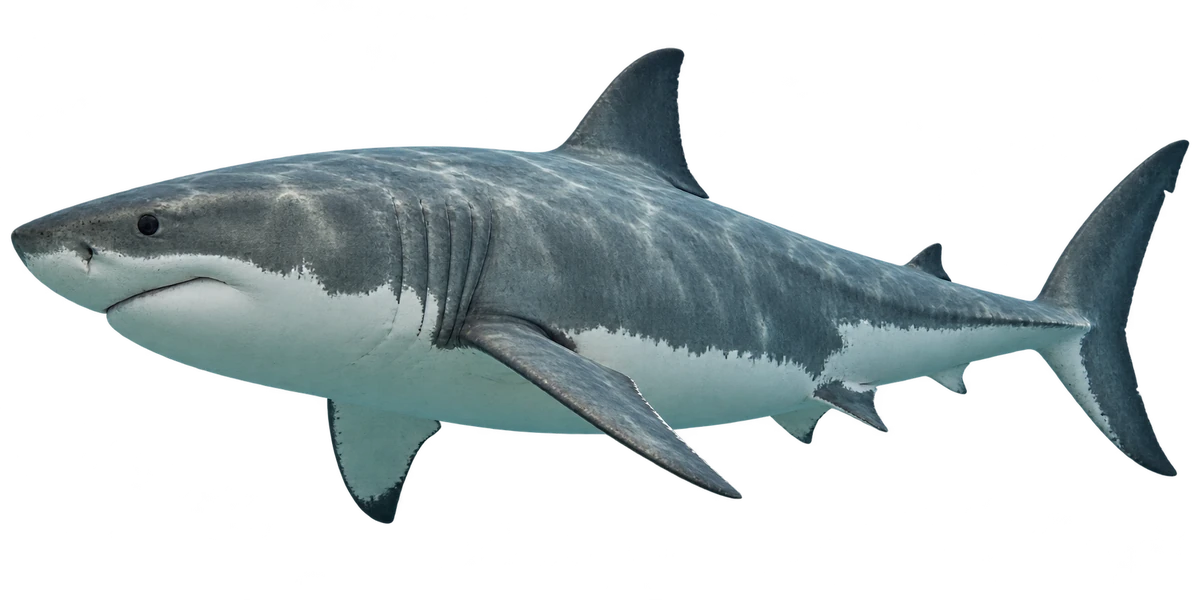
Meet the great white
Great white sharks live in temperate and subtropical waters all over the world. Their scientific name is Carcharodon carcharias. In the U.S. they live along the Atlantic coast as far south as the Gulf and the Caribbean, and in the Pacific from Alaska to California and around Hawaii. Young sharks have nursery areas close to shore off southern California and Long Island, New York.
Pups are about 4 feet long at birth, and adults can reach 21 feet and 4,500 pounds. They can live 70 years or more, though they're slow to grow up: males mature at around 26 and females at around 33.
Young sharks eat bottom fish, smaller sharks, rays and schooling fish, while adults gather at seal and sea lion colonies and sometimes scavenge dead whales. They're regionally endothermic, which means they're partly warm-blooded, and they migrate with the seasons.
Conservation
Great whites are a prohibited species in most U.S. waters, which means they can't be kept if caught, and they're listed on CITES Appendix II. Since protections began in the 1990s, numbers in the Northwest Atlantic have been rising, and the Northeast Pacific population appears to be growing too. They still face bycatch, damage to their habitat and overfishing.
Read NOAA's great white shark profileFacts from NOAA Fisheries, checked October 2026.
Contact me


Got a question about a figure, or want one made? Drop me a line and I'll write back.
[email protected]Thanks for stopping by!